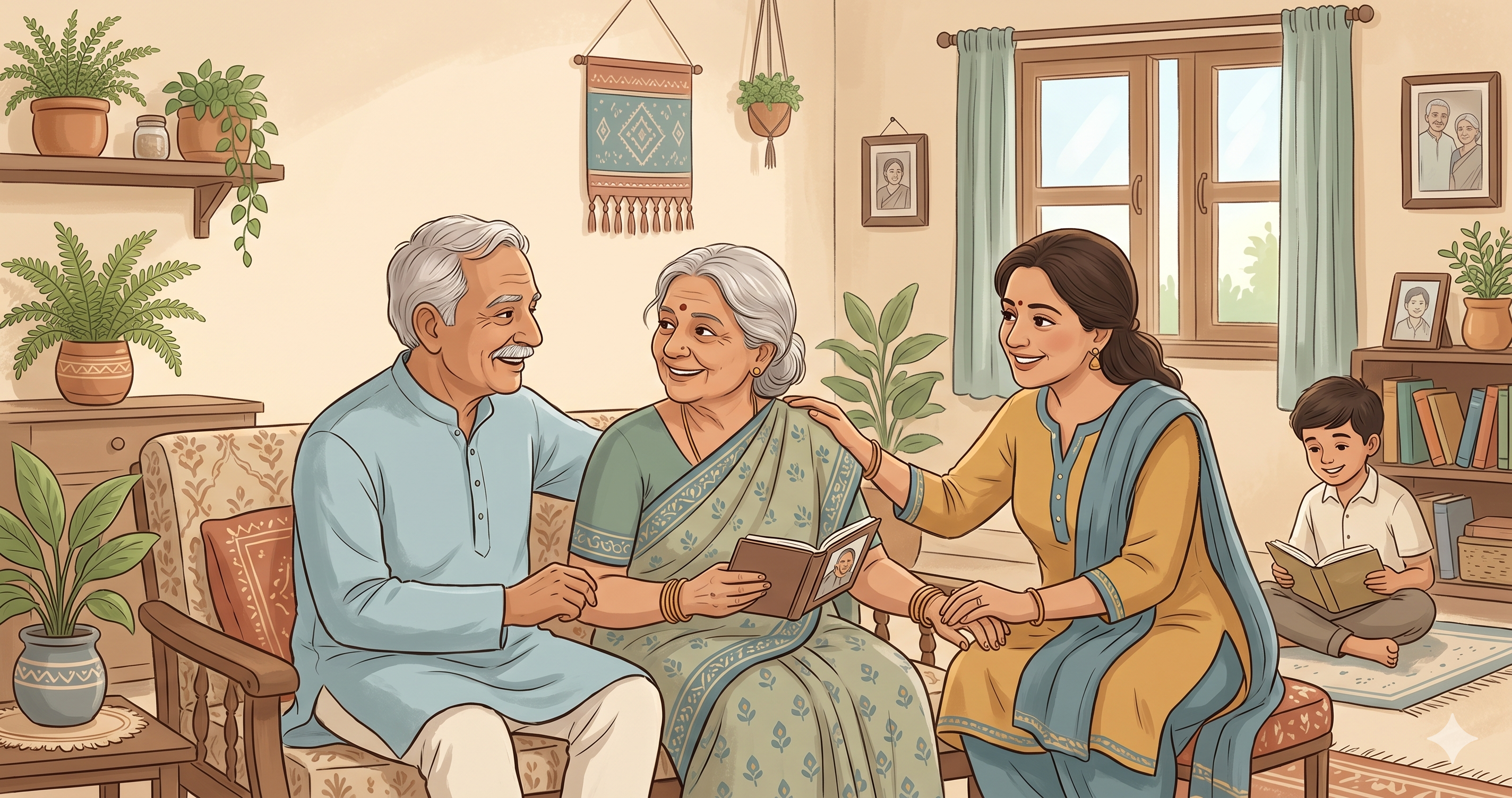
Indian Families Often Miss Dementia doesn't announce itself with dramatic symptoms. It arrives quietly, masking itself as normal aging or stress. In Indian households, where multi-generational living is common and family members often attribute behavioral changes to "old age," the early warning signs frequently go unnoticed until the condition has progressed significantly. Understanding what to watch for can make a real difference in diagnosis and care planning.
## The Subtle Shift in Daily Routines One of the first signs families overlook is a gradual change in how an aging parent manages daily tasks. An elderly mother who once managed the household finances with precision may suddenly become confused about bill payments. A father who took pride in morning walks might lose interest or forget the familiar route. These aren't dramatic failures they're small inconsistencies that get dismissed. "Amma is just tired," families say, or "Papa's mind is on other things." In reality, difficulty with familiar routines can signal cognitive decline that warrants attention.
## Repetitive Questions and Forgotten Conversations In joint families across Mumbai, Bangalore, and Delhi, elderly parents often ask the same question multiple times within hours sometimes within minutes. Grandchildren might have told Grandmother about their exam results three times in one evening, yet she asks again as if hearing it for the first time. Families typically normalize this as a hearing issue or simple forgetfulness. However, repeated questions about the same event, despite recent answers, differ from occasional memory lapses. This repetition can indicate early memory loss that progresses beyond normal aging.
## Withdrawal and Mood Changes A significant but often-missed sign is social withdrawal. An elderly parent who once enjoyed evening gatherings with neighbors or attended temple regularly may suddenly resist these activities. They might seem irritable, anxious, or uninterested in family events. Indian families sometimes interpret this as personality change or moodiness rather than a symptom requiring medical evaluation. The person may struggle to follow conversations in group settings, leading to embarrassment that drives further withdrawal.
## Language and Communication Difficulties Listen carefully when an aging parent speaks. Do they struggle to find common words? Do conversations feel disjointed? Does comprehension seem slower than before? Early dementia often manifests as difficulty retrieving words, speaking more slowly, or trouble understanding instructions. This differs from occasional word-finding lapses everyone experiences.
## A Typical Family Situation Consider Mrs. Sharma, a 68-year-old in Chennai whose daughter first noticed something was wrong when her mother stopped cooking a task she'd performed daily for 45 years. Initially, the family thought she was simply tired. Over three months, Mrs. Sharma became increasingly confused about medications, repeatedly asked about her husband (who had passed five years earlier), and seemed anxious in unfamiliar situations. Only when her NRI son insisted on a medical evaluation did the family pursue cognitive testing. Early-stage dementia was diagnosed. Had they recognized these signs earlier, intervention could have begun sooner.
## What Families Should Do
- Document changes carefully.
- Note specific instances when routines were forgotten or questions were repeated. Specific examples help doctors assess cognitive decline.
- Schedule a comprehensive medical evaluation.
- Not all memory issues indicate dementia. Depression, medication side effects, thyroid problems, and nutritional deficiencies can mimic early dementia symptoms.
- Avoid self-diagnosis.
- Discussing concerns on family WhatsApp groups leads to speculation rather than clarity.
Professional medical assessment is essential.
## Key Takeaways - Early signs are subtle: watch for changes in routine management, not just memory lapses - Repetitive questions and withdrawn behavior warrant medical attention - Language difficulties and confusion about familiar tasks are worth investigating - Professional evaluation differentiates dementia from other treatable conditions - Early detection enables better care planning and support systems
Recognizing these signs early helps families access timely support and plan appropriate care.