## Understanding Your Parent's Real Mobility Needs
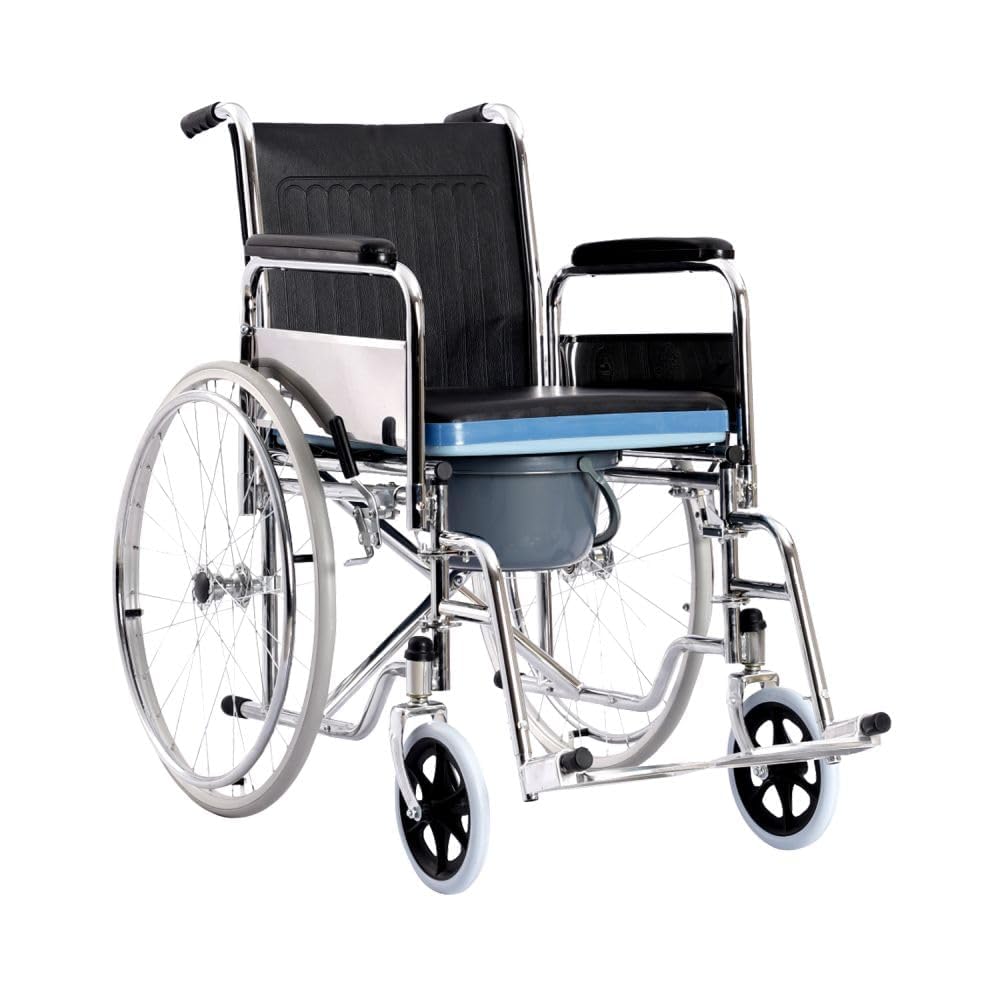
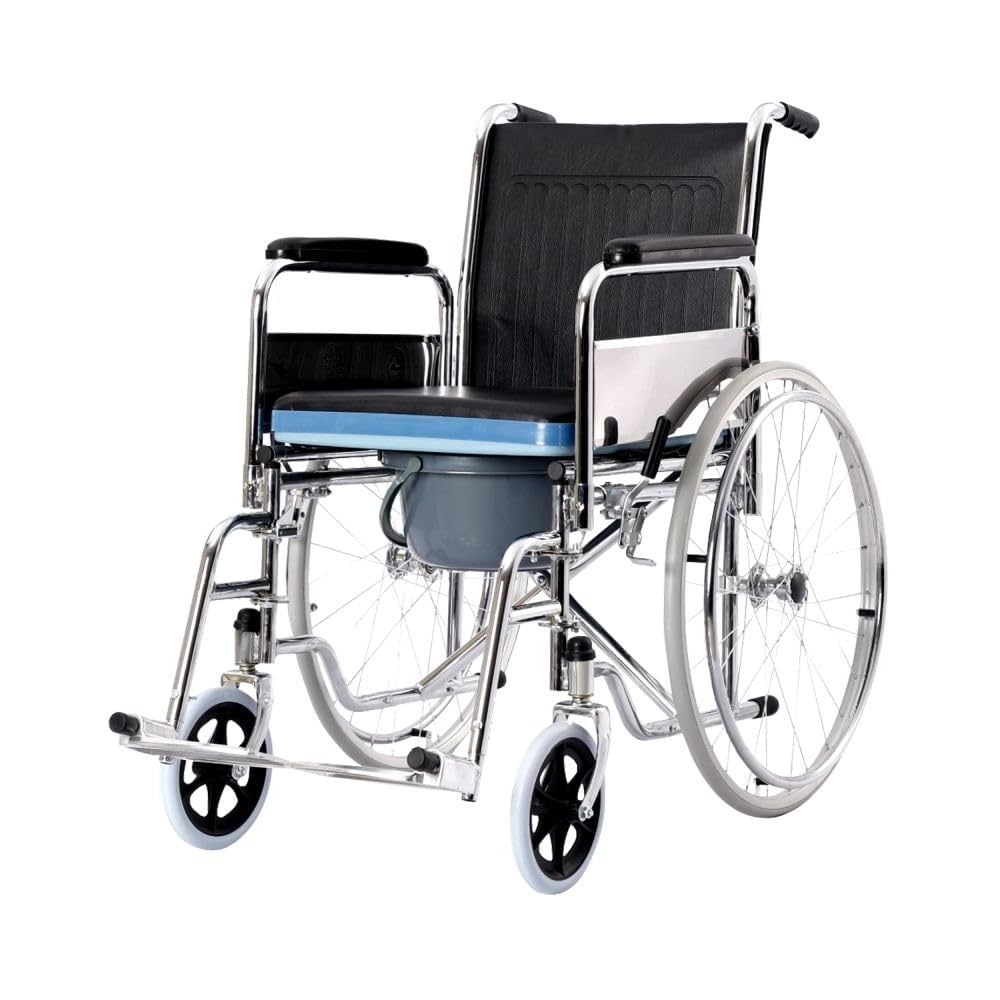
When an elderly parent's walking becomes unreliable or painful, a wheelchair becomes essential. But not all wheelchairs serve the same purpose. The choice between manual, electric, and foldable models depends on three factors: your parent's physical strength, your home layout, and how often mobility happens outside the home. A parent who can still use their arms effectively may do well with a manual wheelchair. Someone with limited arm strength or arthritis, however, will find an electric wheelchair far easier to operate independently. And for families managing multiple homes—between a city apartment and a village house, or between adult children across different cities—a foldable wheelchair offers practical flexibility.
## Manual Wheelchairs:
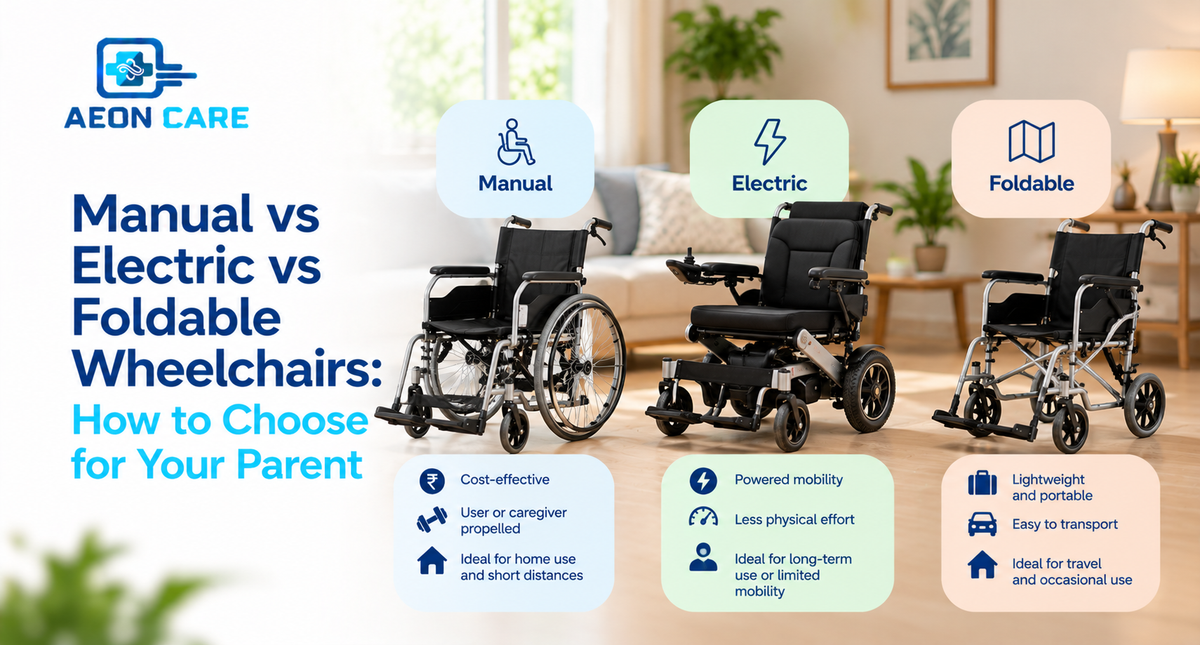
Lightweight and Affordable Manual wheelchairs are self-propelled using arm strength. They're compact, require no charging, and cost significantly less than electric alternatives. They suit active seniors who retain reasonable upper body strength and don't need to travel long distances daily. The trade-off: they demand physical effort and aren't ideal for parents with shoulder pain, arthritis, or limited stamina.
## Electric Wheelchairs:
Independence at a Higher Cost Electric wheelchairs are battery-powered and require minimal physical effort. A parent with weak arms or limited mobility can operate one using a joystick or similar control. They're excellent for longer outings and reduce caregiver strain. The drawback: they're heavier, more expensive than manual options, need regular charging, and require more storage space. They also need occasional maintenance.
## Foldable Wheelchairs:
The Portability Trade-Off Foldable models collapse for transport in car boots—invaluable for families who travel frequently or have limited home space. Most are manual, though some electric foldable options exist at a premium cost. The compromise: some users report slightly less stability than rigid manual wheelchairs, though this varies by model.
## A Real Scenario
Consider a 68-year-old mother in Bangalore whose son works in Mumbai and visits monthly. She can walk short distances but tires quickly. A foldable manual wheelchair lets her accompany him to restaurants and markets when he's home, and her daughter-in-law can manage it easily during daily use. An electric option would be unnecessary expense; a standard manual wheelchair would occupy her small flat permanently.
## Three Practical Takeaways
- Assess whether your parent can use their arms effectively. If yes, start with a manual wheelchair. If no, electric is worth the investment.
- Consider storage and travel frequency. Urban apartments often favour foldable designs; permanent installations suit standard models.
- Test different models if possible. Comfort varies significantly