## Safe Bed-to-Wheelchair Transfers:
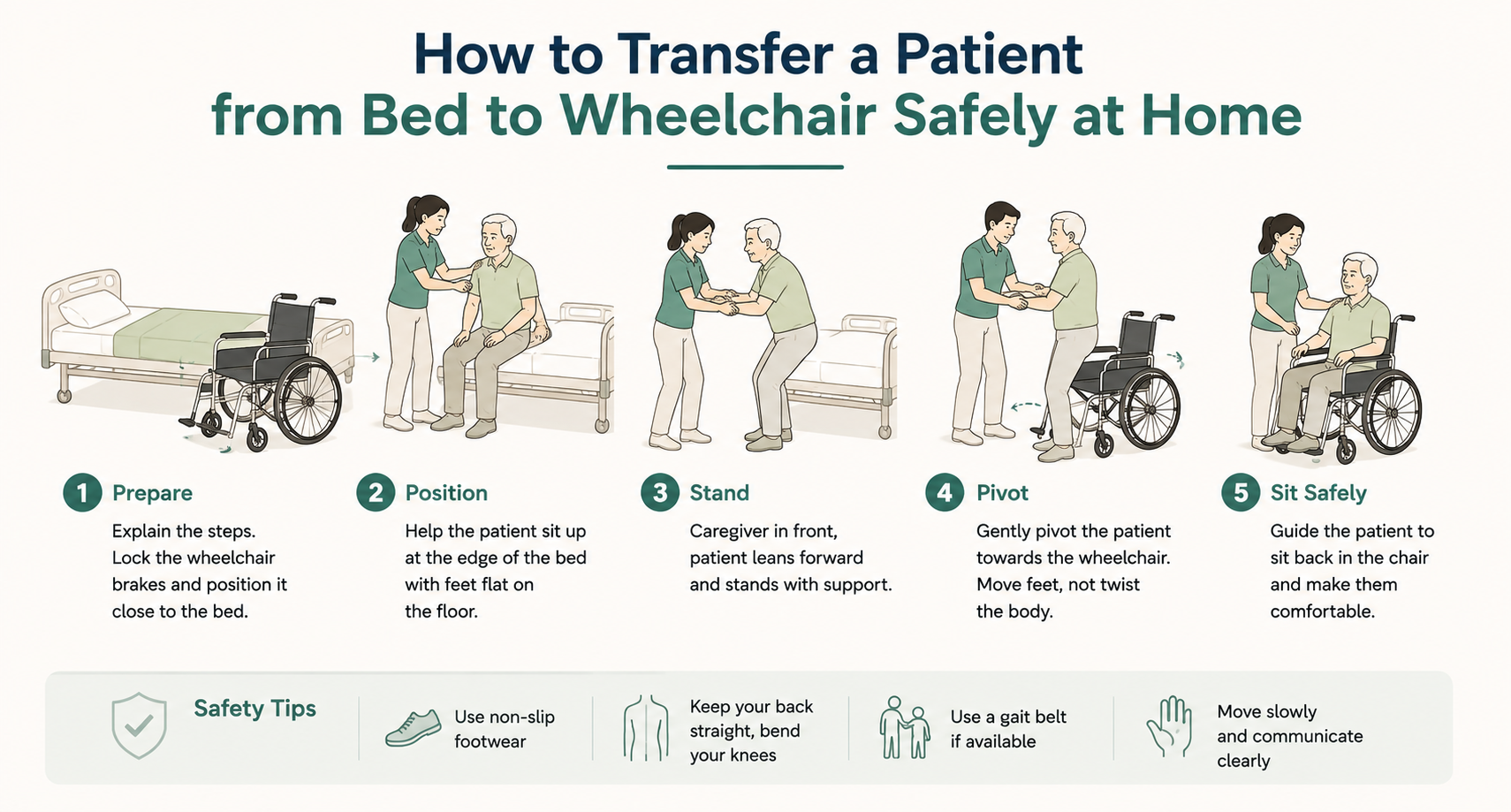
The Foundation Transferring a patient between bed and wheelchair is one of the most frequent tasks family caregivers face in India's home-based care setup. Done correctly, it protects both the patient's dignity and the caregiver's back. The basic technique involves the patient sitting upright on the bed edge, feet flat on the ground, while the caregiver uses their legs, not their back, to assist the standing movement toward the wheelchair positioned at a 45-degree angle nearby.
## When Manual Transfer Becomes Unsafe
Not every patient can be transferred manually. If the patient has limited mobility, significant weight, or conditions like stroke recovery or post-surgery weakness, manual handling risks injury to both parties. This is where a **patient lift hoyer** becomes essential. Hoyers distribute the patient's weight mechanically, removing the strain that causes back injuries in caregivers over months of repeated lifting. A typical scenario: a 65-year-old mother recovering from hip surgery cannot bear weight reliably, and her daughter alone cannot safely lift her 70 kg frame multiple times daily.
## The Reclining Wheelchair Commode Solution
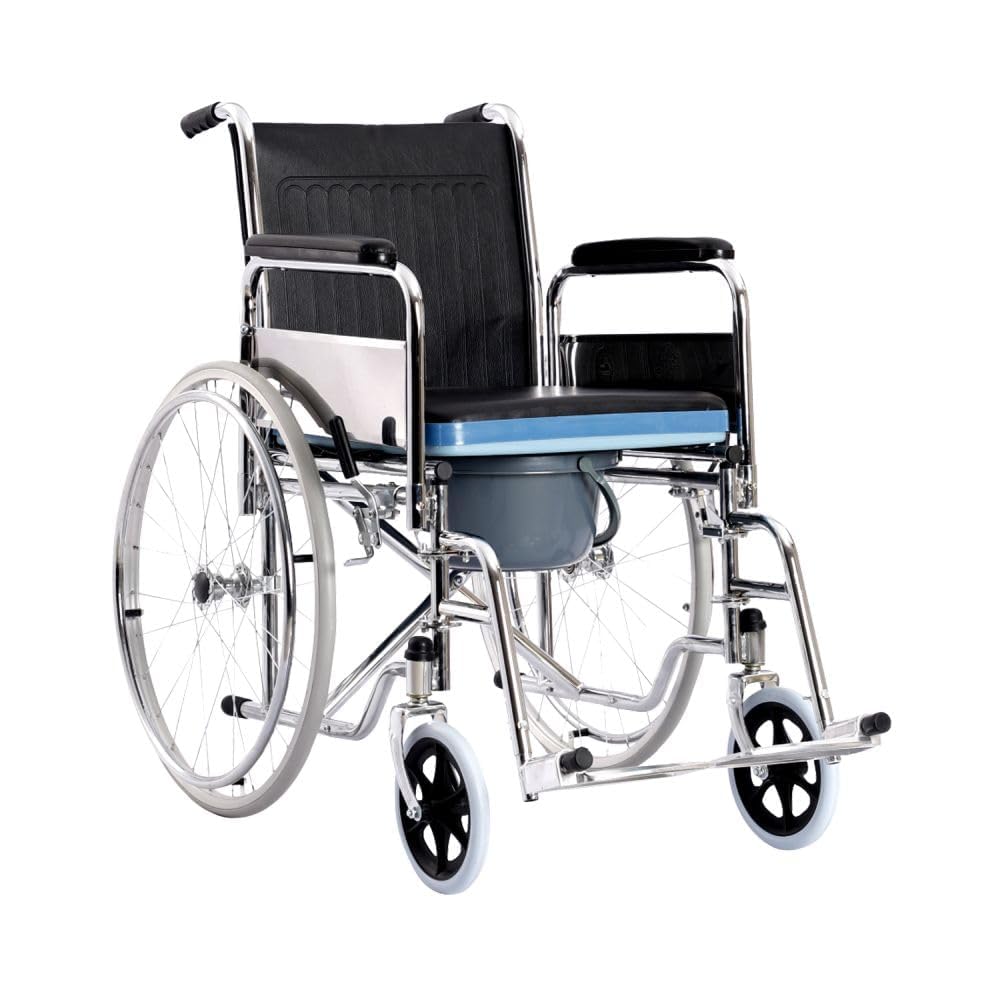
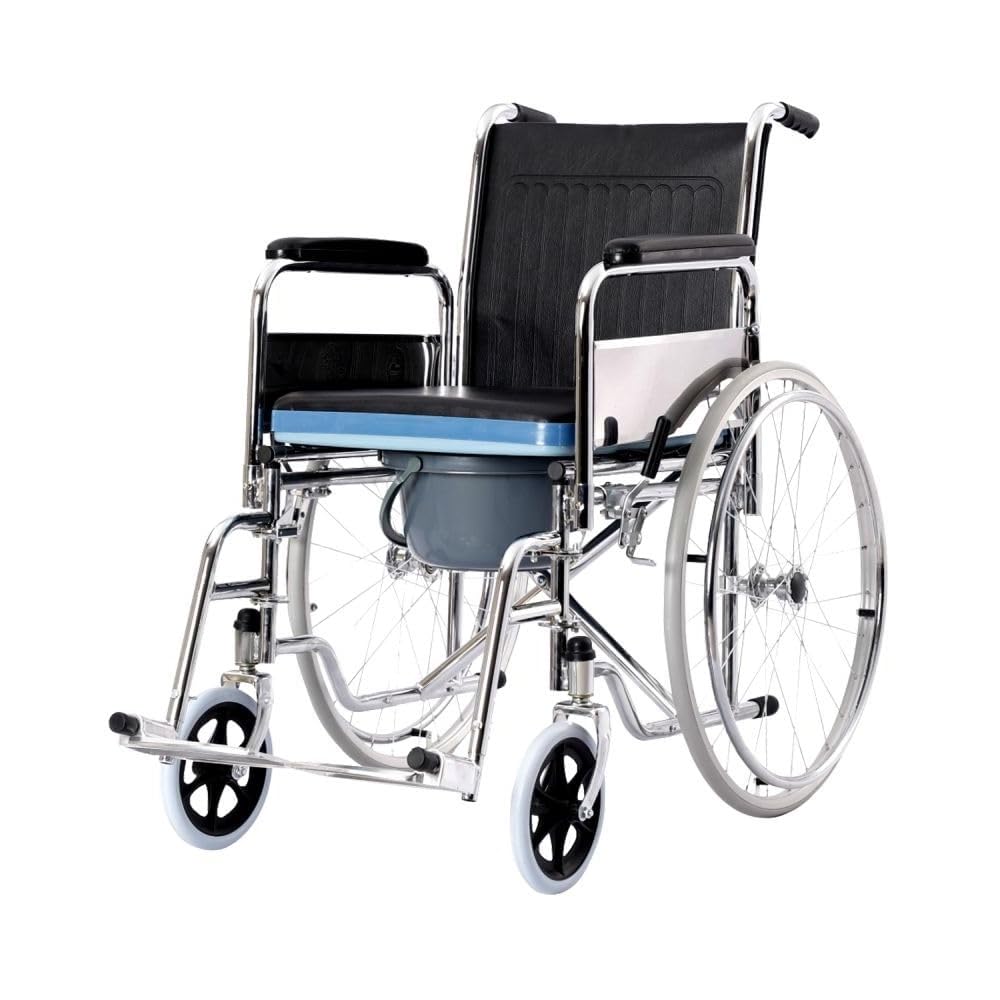
When transfers happen frequently and safely is uncertain, a [reclining wheelchair commode](https://aeoncare.in/collections/other-mobility-aid) reduces the number of transfers needed. These chairs combine mobility, recline function, and hygiene features, allowing patients to remain in one piece of equipment longer rather than moving constantly between bed, wheelchair, and toilet. This is particularly valuable in Indian homes where space is limited and caregivers are often lone daughters or daughters-in-law managing multiple responsibilities.
## Key Takeaways
- Manual transfers work for mobile, lighter patients with good cognition; assess honestly whether your parent fits this profile.
- A patient lift hoyer is not a luxury—it is injury prevention for caregivers managing long-term care.
- A reclining wheelchair commode can simplify daily routines and reduce physical strain significantly.
Explore mobility aids and patient transfer equipment suited to your parent's needs at aeoncare.in/collections/other-mobility-aid. Our range supports both active patients and those requiring extended seated care.