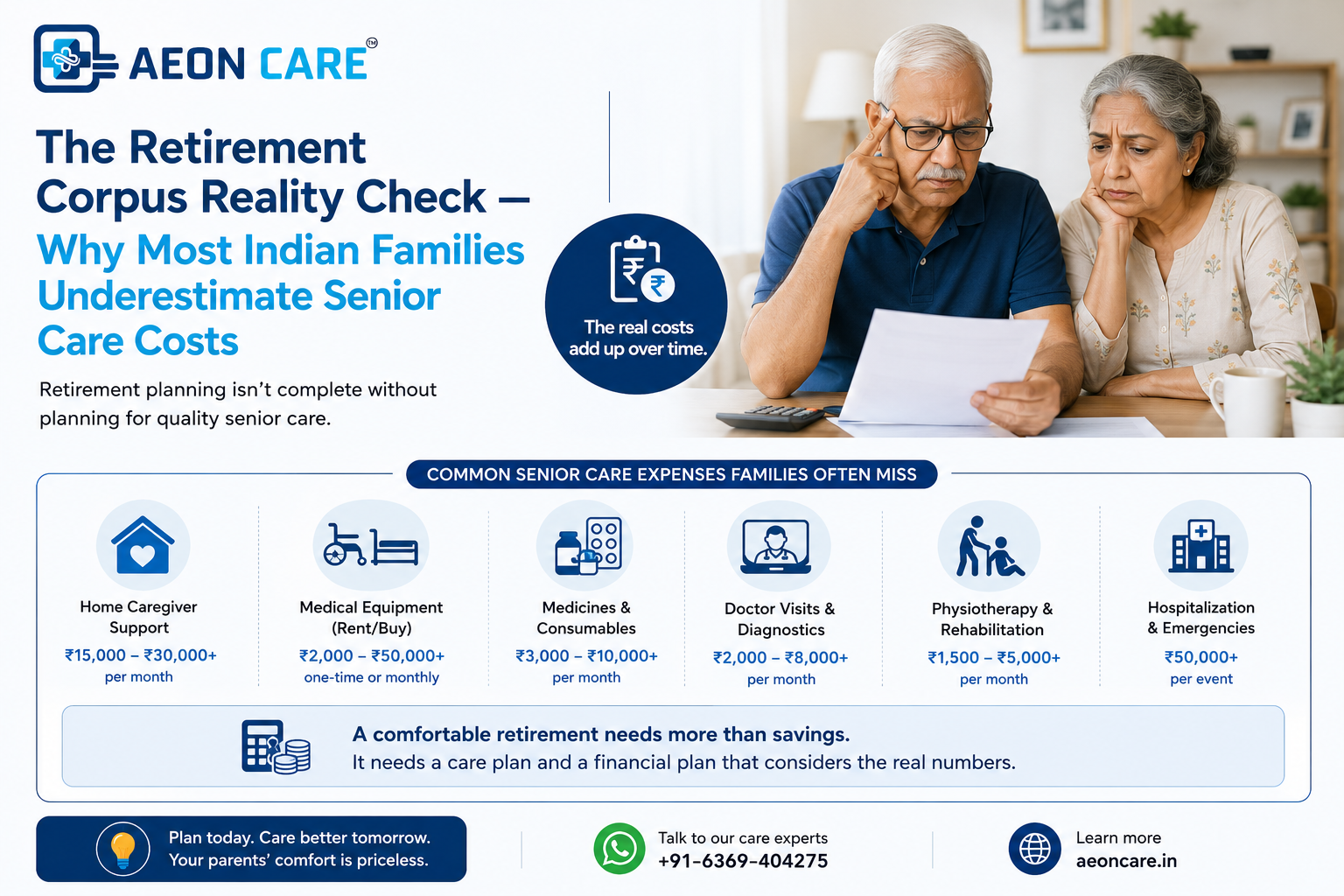
When parents retire in India, families typically focus on pension adequacy and investment returns. What gets overlooked, however, is a separate calculation entirely: the true cost of aging itself. Medical expenses, mobility aids, home modifications, and hired help add up quietly, often surprising families mid-way through their parents' later years.
The numbers shift when a parent turns 75. Health emergencies become more frequent. A slip in the bathroom isn't just a scare anymore; it's a hospitalization. A knee pain isn't managed with a paracetamol; it requires a physiotherapist visiting twice weekly. These costs exist outside the standard "living expense" budget most families plan for.
What Families Usually Miss
The typical Indian family budgets for rent, groceries, and medicines. They miss the category costs: a walker, grab bars, a walking stick, a raised toilet seat, a commode chair. They underestimate the wage of a trained caregiver (anywhere from Rs. 15,000 to Rs. 35,000 monthly in Chennai depending on qualifications), which often becomes necessary when a parent develops mobility issues or early cognitive decline.
Annual health costs post-75 can range from Rs. 1 to 3 lakhs depending on chronic conditions like diabetes, hypertension, or arthritis. Add to this the psychological cost of falls, which can mean unexpected orthopedic surgery, post-operative care, and several months of rehabilitation support at home.
Consider this example. Their father retired at 60 with a pension that covered his expenses comfortably. At 72, after a minor fall, the family needed to hire a part-time caregiver (Rs. 18,000 monthly), install safety equipment (Rs. 40,000), and increase his physiotherapy frequency. Their quarterly medical expenses jumped from Rs. 8,000 to Rs. 25,000. What seemed like adequate retirement planning suddenly felt tight.
How to Calculate Realistically
Start by documenting current health conditions. A parent with diabetes and arthritis will have different aging costs than one in perfect health. Research actual caregiver wages in your city. Call three agencies. Ask about equipment costs through medical suppliers, not just online prices. Factor in inflation, especially medical inflation, which runs higher than general inflation in India. Add a buffer of 30 to 40 percent for unexpected expenses. That slip in the bathroom, the sudden hospitalization, the medication adjustment. These happen.
Practical Takeaways
First, separate "living expenses" from "aging care costs" in your financial planning. They are different budgets with different trajectories.
Second, begin conversations with parents about their health baseline now. Document existing conditions, medications, and mobility levels. This clarity prevents surprises later.
Third, review this calculation every two years or after any health event. Aging costs are not static.
The earlier families run these numbers, the less financial stress accompanies the actual caregiving years.