How to Properly Check a Caregiver's References Before Hiring
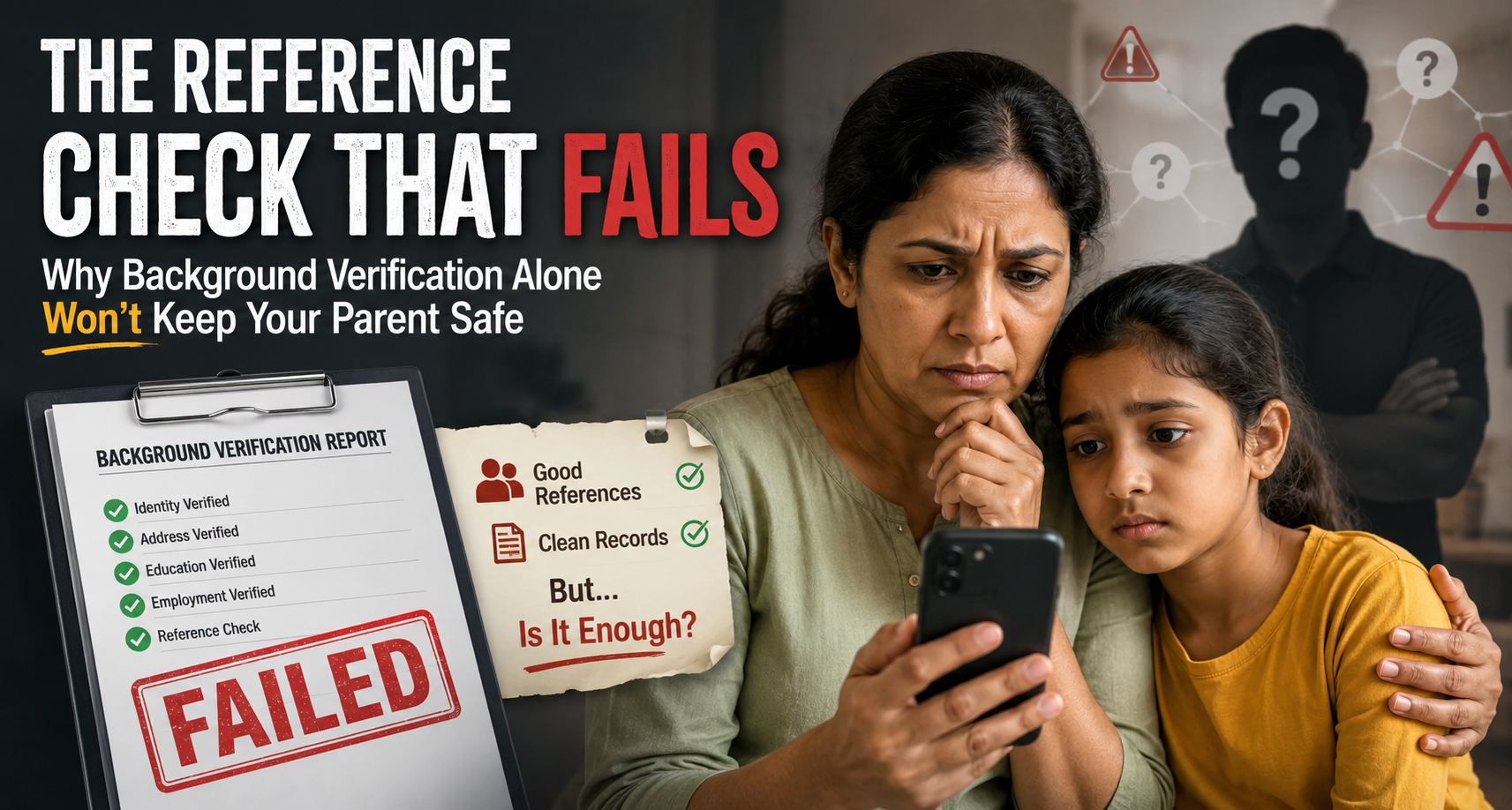
When a family in Bangalore hires someone to care for their 78-year-old mother, they typically ask for references. The candidate provides two phone numbers. The family calls. Both say glowing things. The hiring happens within days. Six months later, valuables go missing. The mother's medications are rearranged. Small incidents accumulate into a pattern that should have been caught earlier. The problem wasn't the reference check itself. It was what the family didn't ask during it.
The Limits of Standard References
References provided by job candidates are inherently filtered. A caregiver will naturally supply contact details of people who will speak positively about them. This isn't deception, exactly. It's selection bias. What's missing are the difficult questions, the specific scenarios, and the probing follow-ups that reveal true capability and trustworthiness. A reference might confirm that someone "worked for our family for two years." But it won't explain why they left. It won't clarify how they handled the day when the elderly parent had a fall. It won't describe their reaction when asked to follow a strict medication schedule.
What Questions Actually Matter
When calling a reference, move beyond "Was this person reliable?" Instead, ask about specific situations. Did they handle bathing assistance with dignity? How did they respond when corrected? What happened during a medical emergency? Did they maintain confidentiality about the family's personal matters? Ask the reference to describe a conflict or a mistake the caregiver made, and how they handled it. Honest references will acknowledge that no one is perfect, and they'll describe how the caregiver learned from problems. Also ask: why is this person no longer working for you? In India's joint family culture, continuity of care is valuable. Understanding why someone left a previous role reveals patterns. Someone who leaves after three months across multiple families is different from someone who stayed for years but needed to relocate.
The Secondary Verification Layer
References are one piece. Equally important is observing the candidate's interaction with your parent during a trial period. How do they respond when your parent repeats a question for the third time? How do they handle resistance during personal care tasks? Do they sit and engage, or disappear into the corner? Some families in Chennai and Kolkata use a one-week probationary arrangement. This isn't about trust alone. It's about seeing whether the reference feedback matches real-world performance.
Practical Takeaways
- Prepare 10 to 15 specific questions before calling references, focused on real scenarios rather than general character.
- Ask one reference why the caregiver is no longer with them, and listen carefully to the answer.
- Conduct a proper trial period where you observe interactions and gradually increase responsibilities. Home care hiring in India requires more than ticking a reference box. It requires structured questioning and real-world observation.
For guidance on building a reliable home care team with proper vetting processes, explore Aeon Care's senior care staffing and support resources.