Finding a trained caregiver in India is harder than it seems. Your family calls an agency, receives a list of names, conducts interviews, and hires someone based on experience and references. But what does "experience" actually mean? Often, it means years of informal, on-the-job learning with no formal certification, no standardized skills assessment, and no structured knowledge about elder care best practices.
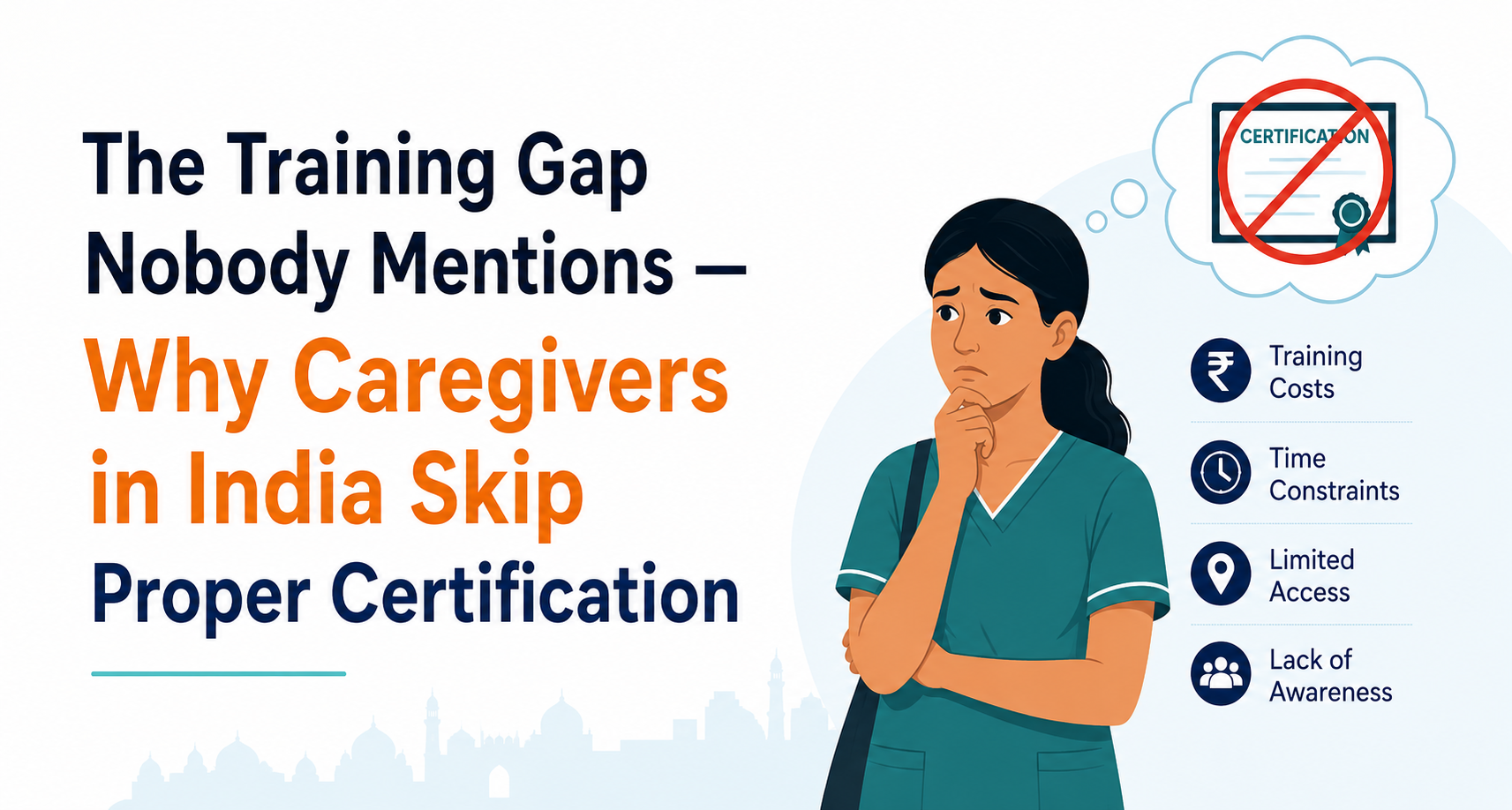
**The Real Barrier: Economics Over Credentials** A trained caregiver in most Indian cities—Delhi, Mumbai, Bangalore, Chennai can earn roughly the same salary as an untrained one. This creates little financial incentive for caregivers to pursue formal training programs. These programs require time (weeks to months), upfront costs (tuition fees), and opportunity costs (lost wages during training). For someone earning monthly wages and supporting a family, this investment feels too risky. Employers also prefer lower wages, so they rarely require certification, further reducing motivation.
**The Certification Maze** India has no single, nationally recognized standard for home caregiver certification. Some state-level initiatives exist, and private institutes offer courses, but quality varies widely. A caregiver trained in Tamil Nadu may not have the same skill level as one trained in Maharashtra. This fragmentation makes it difficult for families to verify what "trained" actually means when hiring.
**When Good Experience Isn't Enough: A Real Scenario** Consider the Sharma family in Pune. Their mother needed post-surgical care after a hip replacement. They hired a caregiver with 8 years of "experience" caring for elderly patients. Two weeks into her stay, their mother developed a pressure ulcer (bedsore) that the caregiver didn't recognize until it worsened. A formally trained caregiver would have known the early warning signs and prevention techniques. The family faced unexpected medical complications and higher costs. The caregiver wasn't negligent—she simply lacked the specific training most families assume comes with experience.
**What Families Can Actually Do** Rather than waiting for an industry-wide solution, families can take three steps.
- First, ask potential caregivers about specific tasks: Can they assist with mobility safely? Do they know how to prevent falls? Can they recognize signs of infection or distress? Don't accept vague answers like "I've done it before."
- Second, consider caregivers trained through recognized private institutes or organizations in your city, even if they cost slightly more.
- Third, plan for a structured handover period where you or a trained family member teaches your caregiver your parent's specific needs and your family's preferences.
The Takeaway
Certification gaps exist because the incentives don't align. Until they do, your family becomes the quality gatekeeper. Ask detailed questions, verify practical skills, and invest in training your caregiver about your parent's unique situation.
Aeoncare connects families with vetted caregivers trained in essential elder care practices. Explore how structured caregiver partnerships reduce complications and give your family peace of mind. Visit aeoncare.in to learn more.