
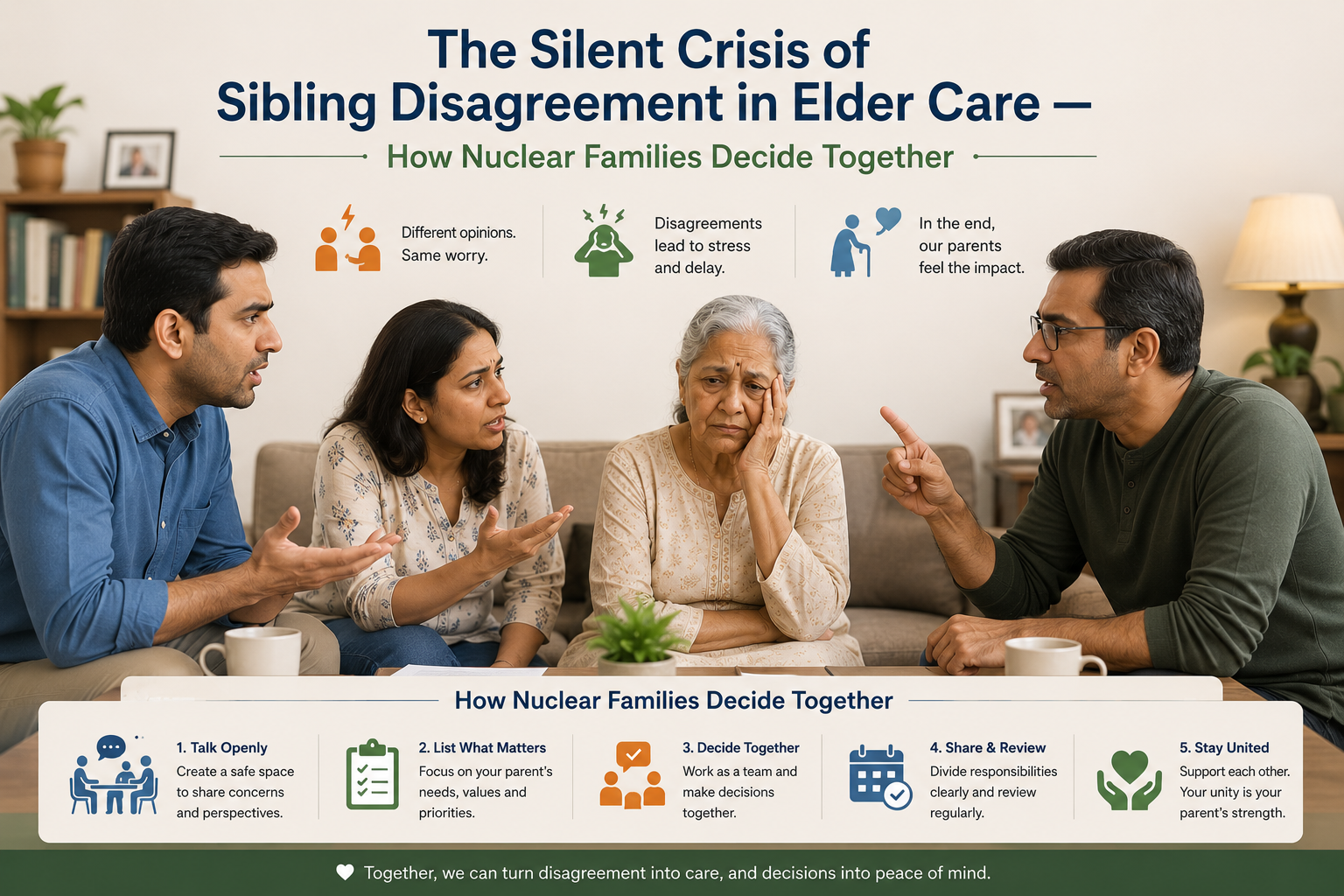
In nuclear families across India, a quiet conflict often emerges when parents age. It is not about love or intention. It is about disagreement.
One sibling believes the parent should move to an assisted living facility in Bangalore. Another insists they stay home with hired help. A third wants them to relocate closer to whoever has "more free time." Meanwhile, the parent sits in the middle, confused and stressed by the tension. This is the elder care gap that nobody discusses openly: not the gap between need and availability, but the gap between what different family members think is right.
Why Siblings See Things Differently
Each adult child carries a different perspective shaped by geography, financial capacity, and personality. The eldest may feel burdened by default responsibility. The youngest may offer solutions without understanding ground realities. An NRI sibling may suggest expensive options unaware of local costs. The one living nearest may feel abandoned by distant siblings who make decisions by phone. These disagreements delay care. A parent with mobility issues waits for consensus while months pass. Opportunities to set up preventive care or home modifications get postponed. The parent's condition sometimes worsens while the family argues.
A Real Situation
Consider Mrs. Sharma, 74, living in Hyderabad with her husband. She has three children: one in Delhi (a doctor), one in Mumbai (a banker), and one in Hyderabad (unemployed currently). Mrs. Sharma falls and fractures her wrist. The Delhi daughter immediately suggests a full-time live-in caregiver costing 25,000 rupees monthly. The Mumbai son questions why they need this when she can manage with occupational therapy. The Hyderabad daughter feels invisible, as if her presence is being dismissed. Six weeks later, Mrs. Sharma still has no structured support, and the fracture is healing poorly.
Moving Past Gridlock
Successful families establish a decision-making process before crisis hits. This means: Designating one sibling as the primary decision-maker for day-to-day care (usually the one nearest the parent). Remote siblings agree to this upfront. Setting financial boundaries early. If multiple siblings contribute, clarify who pays for what and up to what amount. Making decisions based on the parent's preferences and medical needs, not on sibling convenience or guilt. Scheduling quarterly family meetings, even brief video calls, to review what is working and what needs adjustment. Documenting agreements in writing. A simple email summary prevents misremembering later.
Key Takeaways
Disagreement in elder care is not a sign of family failure; it is a sign that you need structure. Establish clear roles and financial agreements now. When conflict arises, return to what the parent actually needs, not what each sibling thinks they should do. Most importantly, prevent decision paralysis by giving one person the authority to act. Your parents cannot wait for perfect family consensus. They need care that starts today.
Aeoncare understands the complexities families face when making these decisions. Our team can help you evaluate care options, cost them out fairly, and present recommendations that siblings can discuss informed and united.