Managing an aging parent's care from abroad presents unique challenges for NRI families. Distance, time zones, and unfamiliar healthcare systems can make decision-making overwhelming. One of the most important decisions is determining when assisted living becomes necessary. Understanding the signs can help families make informed choices that prioritize both safety and independence.
**Recognizing Physical Limitations**
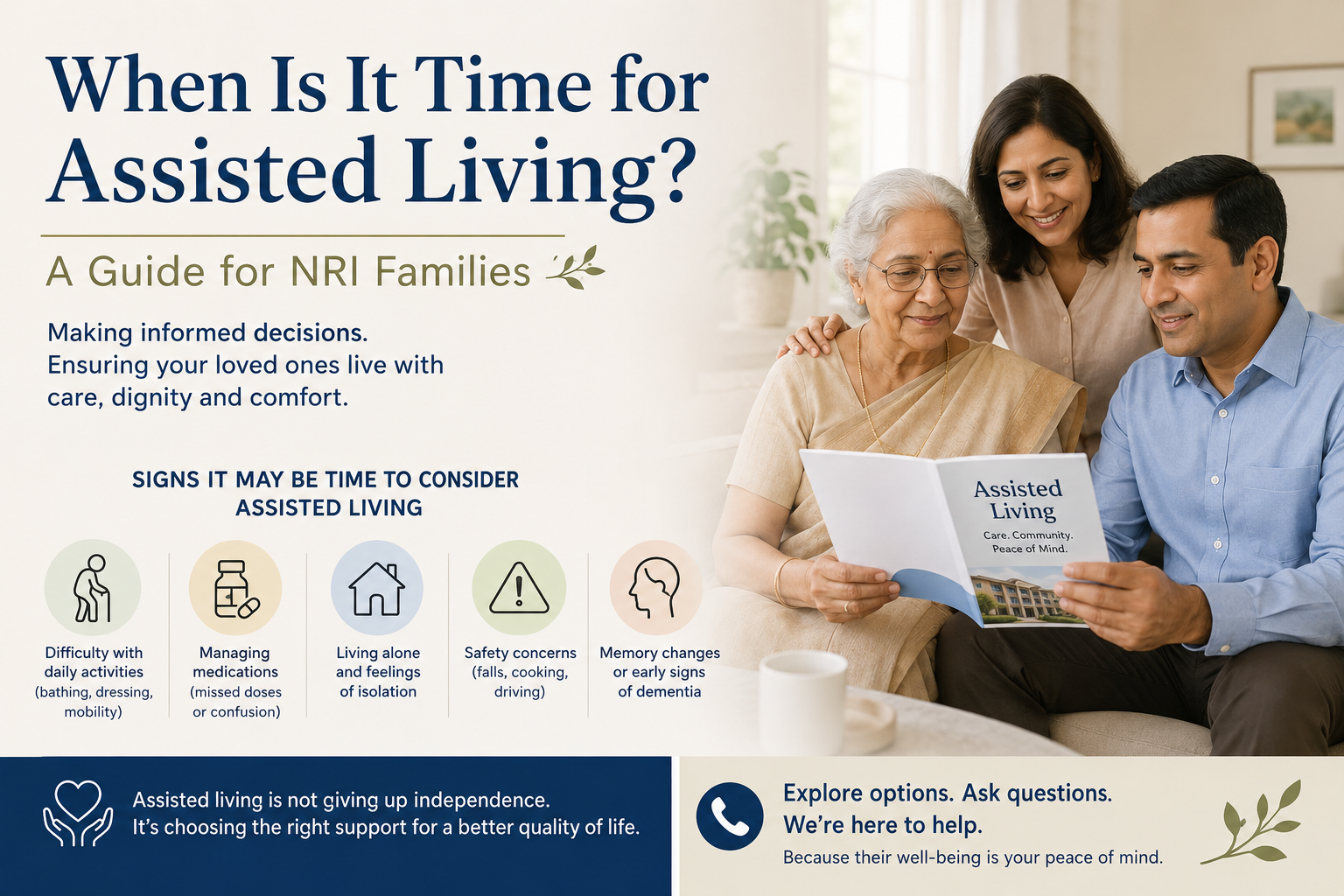
The most visible indicators often relate to daily activities. When a parent struggles with bathing, dressing, meal preparation, or medication management without assistance, it may signal the need for professional support. Mobility challenges difficulty climbing stairs, frequent falls, or inability to move around the home safely are particularly concerning. In Indian homes, where multiple levels and traditional layouts are common, these challenges become even more significant.
**Cognitive Changes and Memory Concerns**
Families should pay attention to cognitive shifts. Repeated questions, difficulty remembering appointments, confusion about dates, or neglecting personal hygiene may indicate conditions requiring professional oversight. These changes often worry NRI children most, as they cannot monitor daily activities directly.
**Social Isolation and Mental Health**
Seniors living alone face significant risks from isolation and depression. If a parent has withdrawn from social activities, shows little interest in hobbies, or frequently expresses loneliness, assisted living communities offer structured social engagement that independent living cannot provide.
**A Real Situation**
Consider Rajesh, an NRI living in Singapore whose 78-year-old mother lives in Chennai. Initially managing through frequent video calls and hired help, Rajesh noticed his mother forgetting to take medications and cooking less frequently. When she suffered a minor fall while attempting household tasks, it became clear that occasional hired assistance wasn't sufficient. After exploring options, Rajesh arranged assisted living at a facility offering medical supervision, daily activities, and social programs providing peace of mind while maintaining his mother's dignity and independence.
**The Caregiver Stress Factor**
Sometimes the decision relates to the primary caregiver's capacity. If an elderly spouse or adult child is struggling physically or emotionally with caregiving responsibilities, assisted living can prevent caregiver burnout while maintaining quality care standards.
**Key Takeaways**
First, recognize that assisted living isn't about removing independence it's about providing professional support while maintaining autonomy.
Second, involve your parent in discussions early; acceptance improves adjustment significantly. Finally, explore quality facilities in your parent's preferred city; India now has reputable assisted living options in major metros like Chennai, Bangalore, and Delhi. The right timing isn't about reaching a crisis point it's about proactive planning that ensures safety and wellbeing.
For families navigating these decisions, professional guidance can clarify options and next steps. Learn more about senior living solutions and care options at aeoncare.in.