The landscape of elder care in Indian homes is shifting. Where previous generations relied solely on in-person caregiving and occasional doctor visits, families today have access to tools that make monitoring health, managing medications, and staying connected remarkably easier - even across continents.
The Growing Need for Smart Solutions
India's ageing population is expanding rapidly. By 2050, seniors will comprise nearly 20% of the country's population. Simultaneously, urbanization has scattered families across cities like Bangalore, Mumbai, and Delhi, while many adult children now live abroad. This separation has created a genuine challenge: how can families ensure their elderly parents receive quality care when distance is a factor? Technology offers practical answers without replacing the human touch that Indian families value deeply.
What's Actually Changing
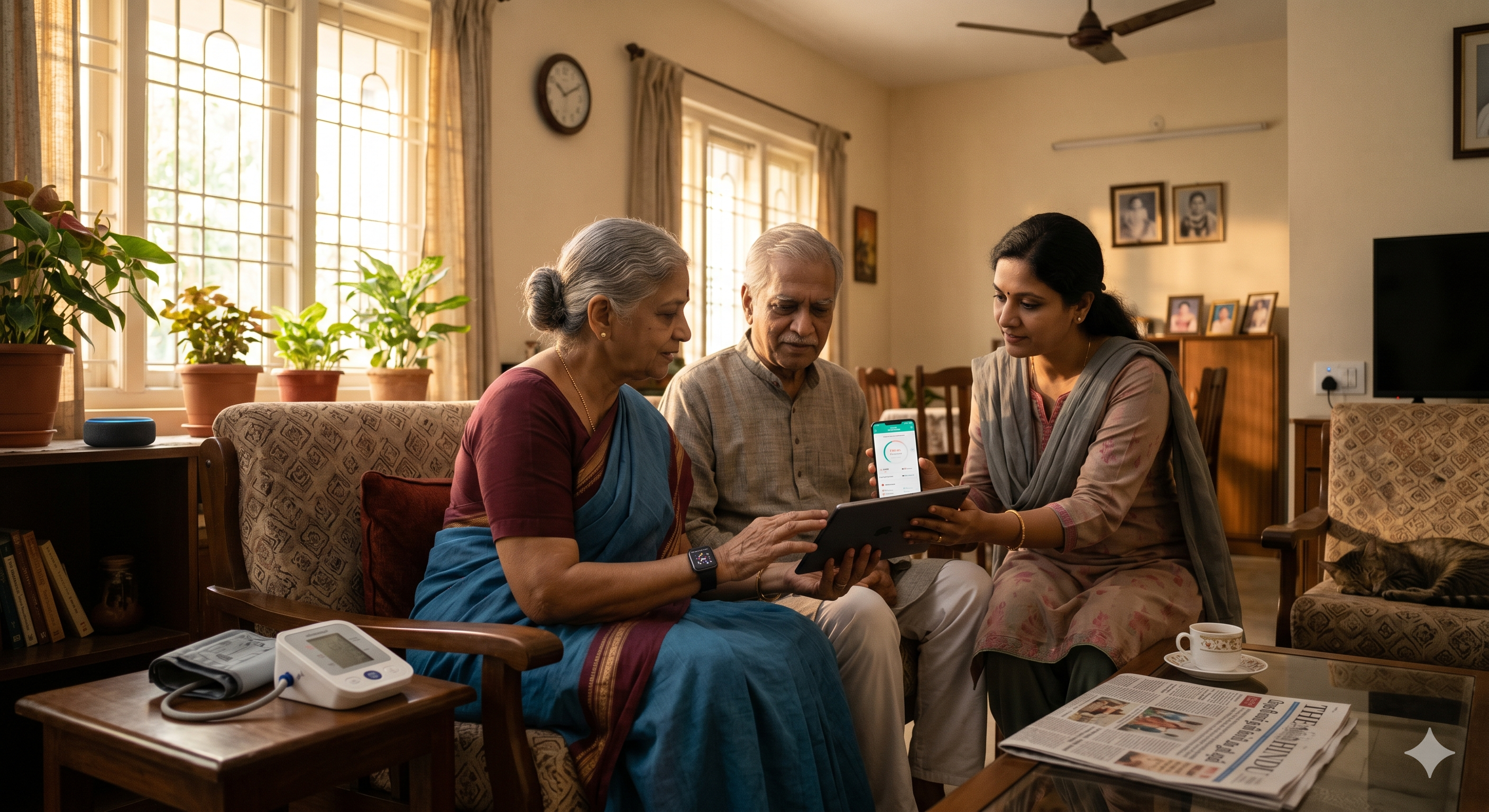
- Health Monitoring Made Simple Wearable devices and smartphone apps now track vital signs - blood pressure, heart rate, sleep patterns - and alert family members if readings fall outside safe ranges. A parent in Chennai can wear a simple wrist device while their child in Singapore receives real-time updates, creating peace of mind without constant phone calls.
- Medication Management Missed doses are a common problem among seniors living independently. Smart pill dispensers send reminders and notify family members when medications are taken, reducing the burden on both elderly parents and adult children managing care from afar.
- Telehealth Consultations Rather than arranging transportation for every doctor's appointment, seniors can now consult specialists via video calls. This proves especially valuable for routine check-ups, medication reviews, or managing chronic conditions like diabetes and hypertension - common in Indian senior populations.
- Emergency Response Systems Personal emergency alert systems allow seniors to call for help instantly. In a fall or health crisis, one button press connects them to family members or emergency services, providing safety without constant supervision.
A Real-World Example Consider Rajesh's situation: His 72-year-old mother lives alone in Hyderabad while he manages his family in London. Previously, he worried constantly about her health and medication compliance. After setting up a health monitoring app and a smart pill dispenser, Rajesh receives daily summaries of his mother's vital signs and medication adherence. When his mother's blood pressure spiked last month, the system alerted him immediately, allowing quick intervention through a telehealth consultation - avoiding a hospital visit. His mother appreciates the independence; Rajesh has peace of mind.
Three Practical Takeaways
- Start with one technology – Don't overwhelm elderly parents with multiple apps. Choose one tool addressing their primary need: health monitoring, medication management, or emergency response.
- Prioritize ease of use – The best technology is one seniors will actually use. Look for large buttons, simple interfaces, and minimal setup requirements.
- Combine technology with human care - These tools supplement, never replace, personal relationships. They free up time for meaningful conversations rather than logistical stress. Technology transforms elder care not by removing human connection, but by removing friction from caregiving. For families navigating the complexities of senior care in modern India, these tools provide genuine relief.
Explore how Aeoncare's senior care solutions integrate practical technology with compassionate service. Visit aeoncare.in to discover products and services designed for Indian families.