
Home-based care sounds straightforward until it starts. Then the reality of managing medications at 7 AM, coordinating with helpers at lunch, handling unexpected health changes by evening, and planning meals around dietary restrictions becomes apparent. For families in Bangalore, Mumbai, Chennai, or beyond, understanding the actual cadence of home care helps set realistic expectations and prevents burnout.
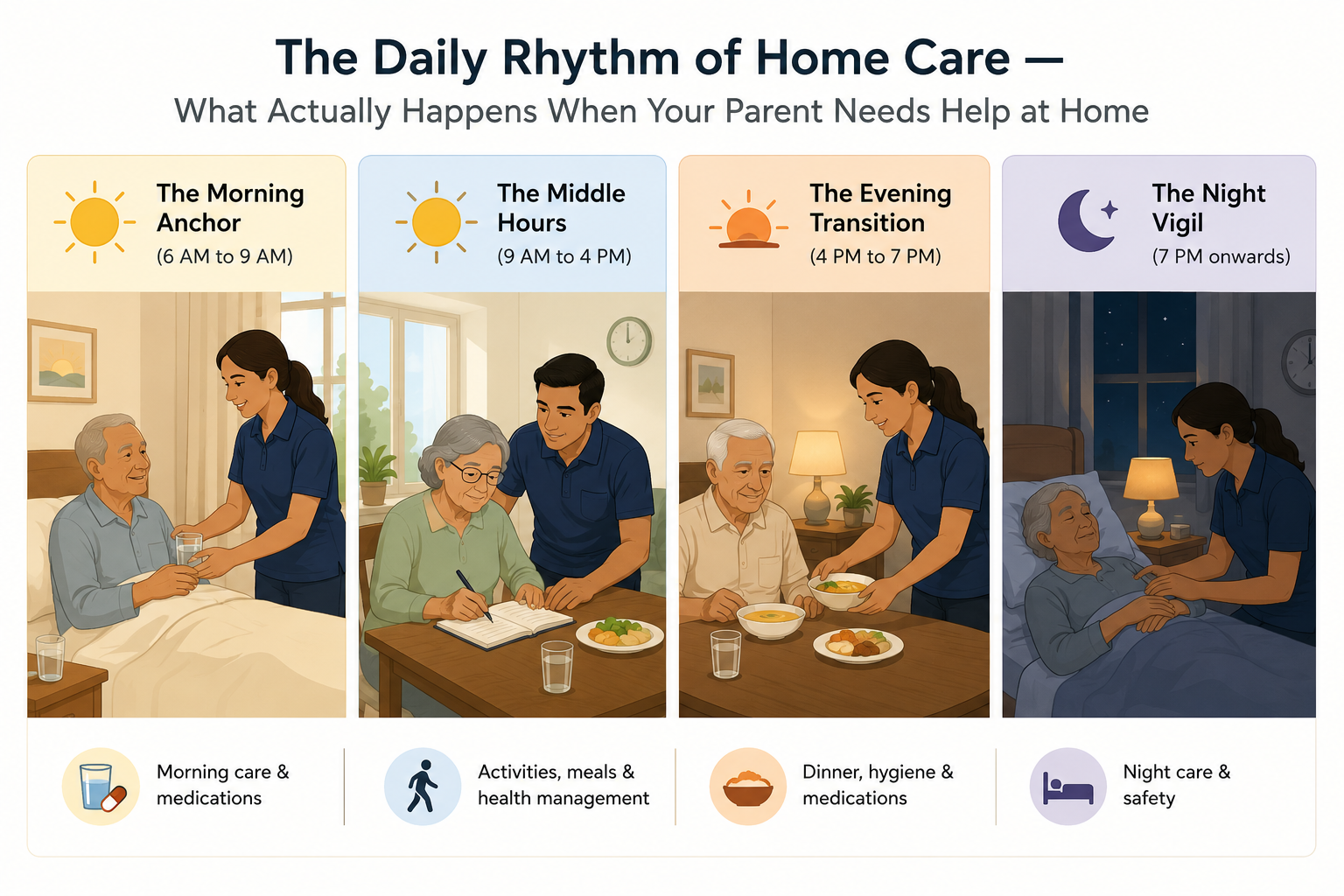
**The Morning Anchor (6 AM to 9 AM)**
The day typically begins with mobility and medication. A senior may need assistance getting out of bed, using the bathroom, and washing up. This is when the first round of medications happens, often paired with a light breakfast. For those with diabetes or hypertension, timing matters. A home helper or family member tracks blood sugar readings or blood pressure, notes them down, and reports concerns. This 3-hour window sets the tone for the entire day.
**The Middle Hours (9 AM to 4 PM)**
This is often the quietest period, yet it demands the most planning. Someone must ensure the senior stays hydrated, takes a light lunch around noon, and engages in some movement, whether a short walk in the compound or seated exercises. For those recovering from stroke or joint issues, gentle physiotherapy exercises happen here. Simultaneously, family members may be handling calls with doctors' offices, managing pharmacy refills, or coordinating with insurance providers. An NRI child might be fielding WhatsApp updates during office hours in Singapore or London.
**The Evening Transition (4 PM to 7 PM)**
As energy dips, the risk of falls and confusion increases. A second round of medications occurs, often with tea and a light snack. This period also involves preparing dinner, which for many Indian families means accommodating salt restrictions, sugar control, or soft foods for those with swallowing difficulties. A helper may bathe and prepare the senior for the evening while a family member confirms the kitchen understands today's dietary needs.
**The Night Vigil (7 PM onwards)**
After dinner and evening medication, the senior settles for the night. Yet this period requires vigilance, especially for those prone to nighttime bathroom visits or confusion. Many families keep a phone nearby or use a bell system for emergencies. **A Real Scenario** Rajesh, a 68-year-old in Hyderabad recovering from a knee replacement, needs someone present during morning physio at 7 AM. His daughter manages this before her work. By noon, his hired helper ensures he eats and takes blood pressure medication. His son, working in Dubai, reviews the daily health log his sister uploads to a shared document each evening. When his father develops a mild fever on a Wednesday, the son coordinates with their local doctor and ensures medication adjustments happen within two hours.
**Key Takeaways**
Home care is not a single task but a choreography of small, interconnected routines. Success depends on someone owning each time block and documenting what happens. Families should plan for this reality before crisis hits, clarifying who handles mornings, who manages afternoons, and how communication flows, especially across time zones or cities.
For structured guidance on building a sustainable home care routine, visit aeoncare.in to explore resources tailored to Indian family needs.