Choose a manual wheelchair if the user has decent upper-body strength or a caregiver who can push it, trips are mostly short and indoors, and budget or portability matters most. Choose an electric wheelchair if the user needs to move independently over longer distances, has limited arm strength, or will use it for most of the day. The right choice usually comes down to strength, distance, and how it will be stored or transported.
The Real Difference Between Manual and Electric Wheelchairs
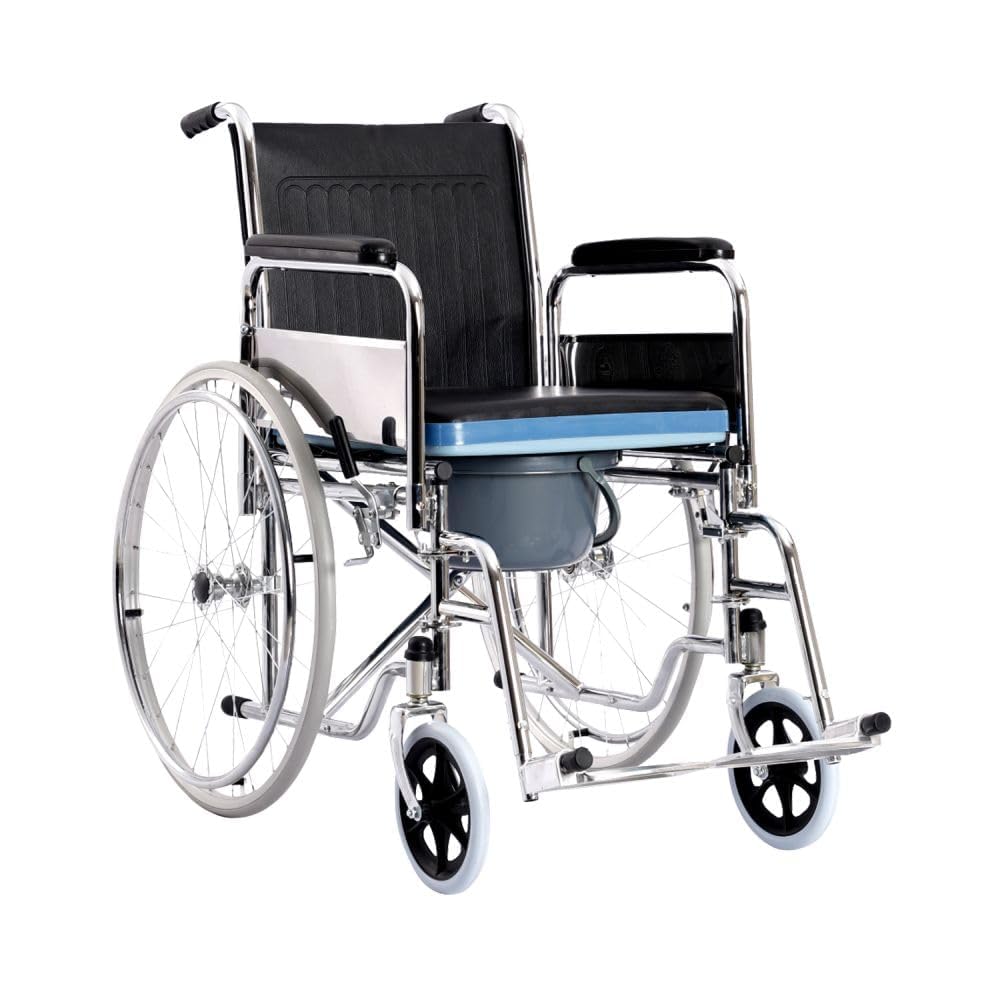
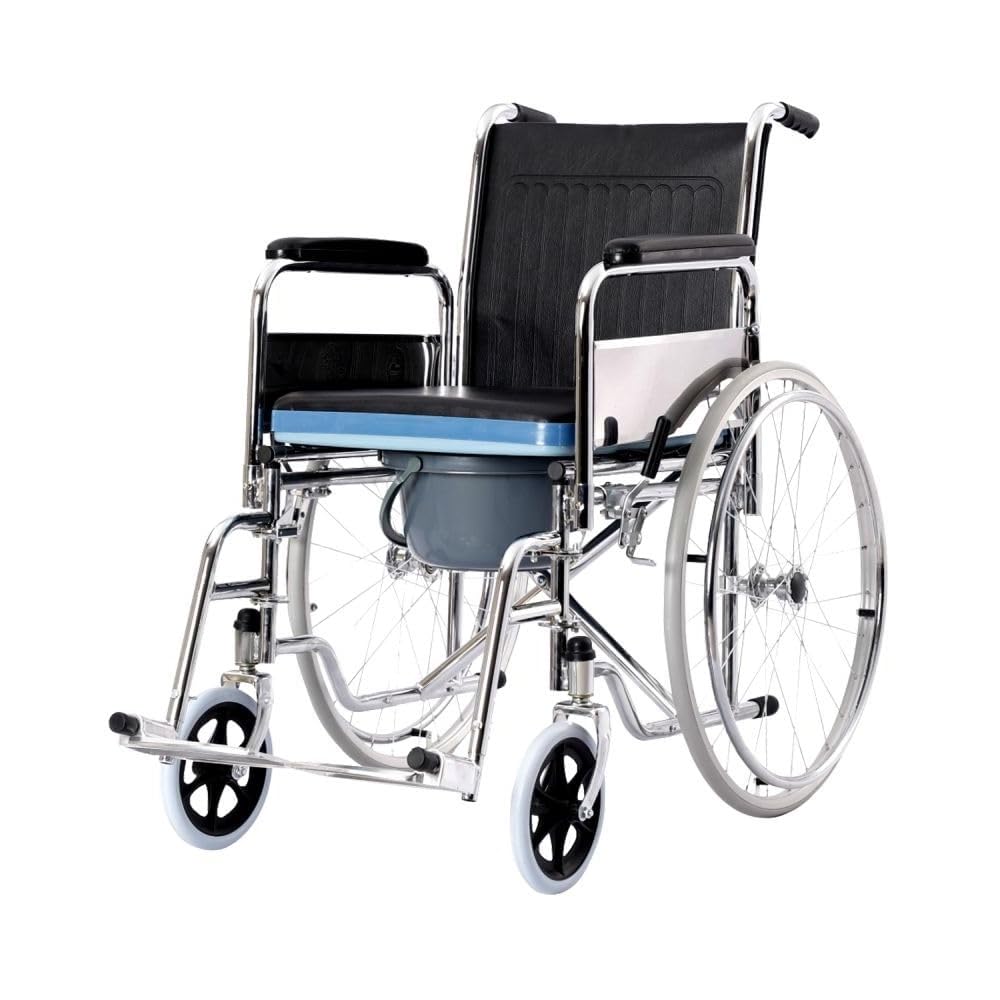
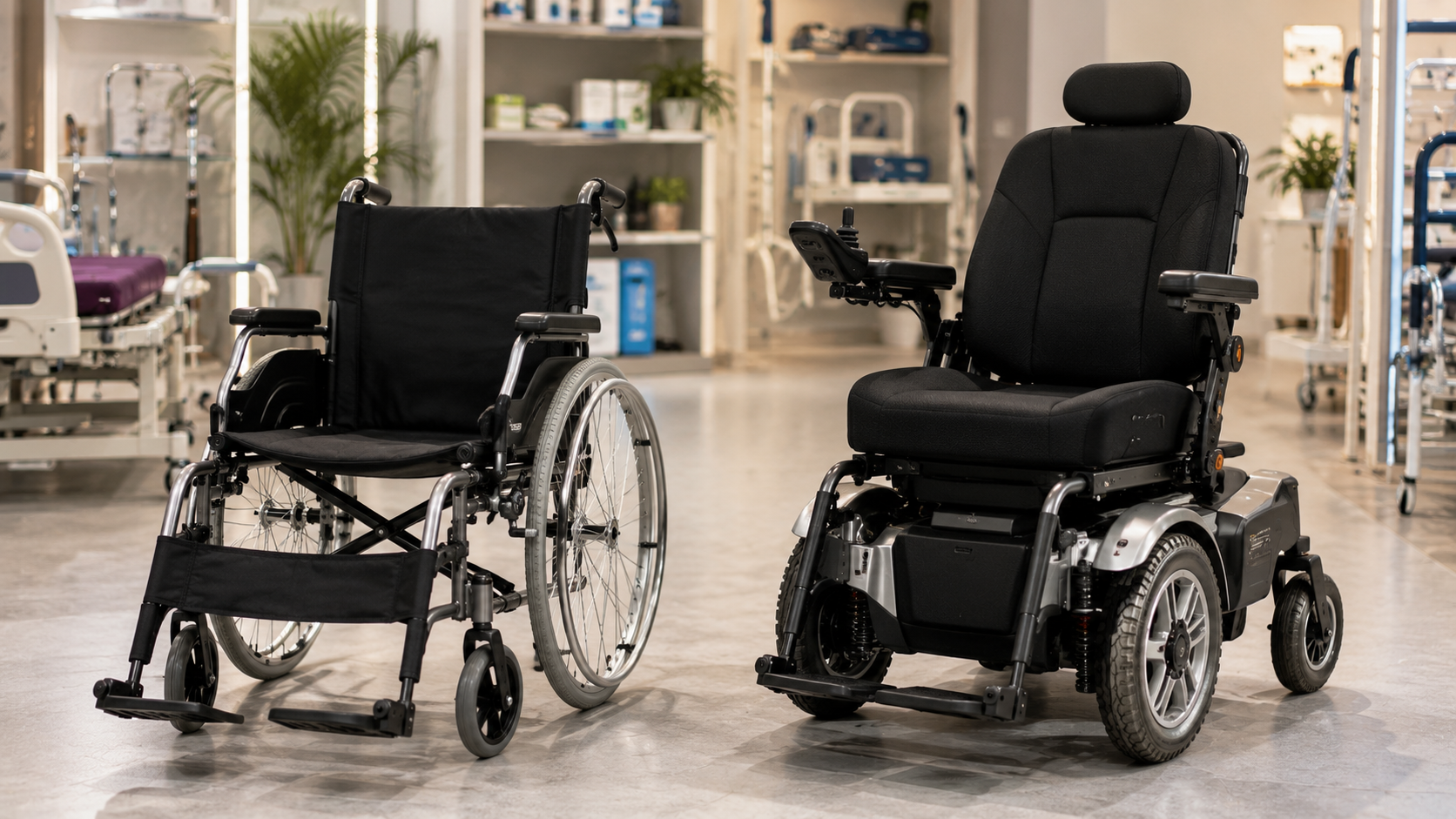
A manual wheelchair is propelled by the user's arms or pushed by a caregiver. An electric (motorized) wheelchair runs on a rechargeable battery and is controlled with a joystick, so the user can move independently without relying on upper-body strength. That single difference, who or what provides the power, drives almost every other decision on this page.
When a Manual Wheelchair Makes More Sense
- The user has reasonable arm and shoulder strength, or a caregiver is consistently available to push
- Most use is indoors or over short distances
- The wheelchair needs to be folded, lifted into a car, or carried up stairs regularly
- Budget is a bigger factor than independence of movement
When an Electric Wheelchair Makes More Sense
- The user has limited arm strength or a condition that makes self-propelling difficult or unsafe
- The wheelchair will be used for most of the day, not just short trips
- Independent movement, without relying on someone else to push, matters for the user's daily life
- The home and usual routes are reasonably wheelchair-accessible, since electric models are heavier
Weight, Portability, and Storage
Manual wheelchairs are lighter and easier to fold into a car boot or carry up a step or two. Electric wheelchairs are heavier because of the battery and motor, and while foldable electric models exist, they still take more effort to transport than a manual chair. If travel and frequent transport in a car are a regular part of life, weigh this before deciding.
Budget and Ongoing Costs
Electric wheelchairs cost more upfront than manual ones, and carry small ongoing costs for battery charging and periodic servicing that a manual wheelchair doesn't have. Both are available on rental in Chennai, which is worth considering if the need is temporary, such as during recovery from surgery, rather than long-term.
Try Before You Buy
Because this is a high-consideration purchase, it's worth trying both types in person rather than deciding from photos online. AeonCare's Porur store stocks both manual wheelchairs and electric wheelchairs for a hands-on comparison, with staff who can walk you through the right fit for the user's specific mobility and home setup.
Written by Hari, Founder, AeonCare.