ARTICLE 02 OF 06
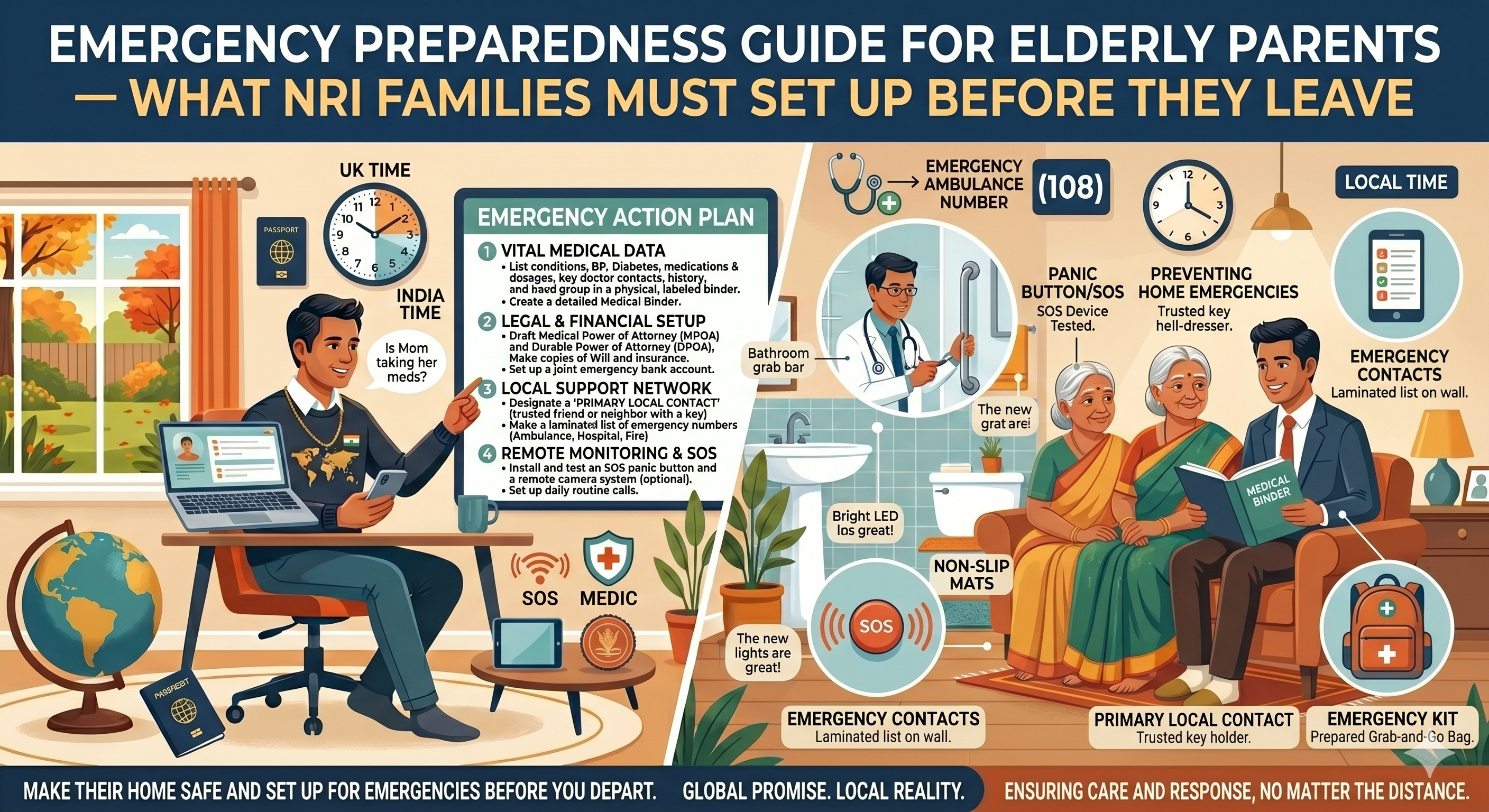
Emergency Preparedness for Elderly Parents — What NRI Families Must Set Up Before They Leave
Emergency planning is not pessimism — it is the most practical thing an NRI family can do. The systems that save time in a crisis must be built long before the crisis arrives.
Reading time: 5 minutes · Emergency Preparedness
Why Preparation Cannot Wait
When distance separates families, proper emergency planning becomes essential rather than optional. The anxiety of being far away during a critical moment is real. Thoughtful preparation substantially reduces both risk and response time — every system described here takes less time to set up than it saves in an emergency.
Create a Complete Medical Information File
Document all relevant medical information in a single, accessible place: chronic conditions, current medications with dosages and timing, known allergies, the primary doctor’s contact details, and the two or three hospitals your parent would go to in an emergency.
Store this in two forms: digitally in cloud storage accessible to trusted family members in India, and physically at home in a clearly labelled folder. Any doctor or paramedic should be able to locate and use this information without asking anyone. Review and update it every six months.
Establish a Local Emergency Contact Chain
Identify reliable local contacts who can respond physically and quickly — a trusted neighbour, a nearby relative, a family friend. Ensure each person holds a spare house key, knows where the medical information file is kept, understands your parent’s specific health concerns, and has your direct contact details.
Set Up Financial and Legal Authority
Authorise a trustworthy person in India to handle financial decisions if needed. Ensure your parent has a current, registered will. A Power of Attorney for both financial and medical matters provides the legal foundation for decisions to be made without delay.
Arrange Professional Support and Regular Communication
A part-time caregiver, even for a parent who lives independently, provides consistent monitoring and a trained first point of contact in an emergency. Establish a schedule for video calls and health check-ins to detect changes in energy, mood, or physical capacity that your parent may not think to mention.
FOR EXAMPLE — Priya, Toronto (age 38)
- Priya’s father had a brief hospitalisation in Pune. After he returned home, she created a shared Google Drive folder with his medical records, cardiologist’s number, preferred hospitals, and a typed medication schedule she taped to the refrigerator.
- Six months later, he had a second cardiac episode. The attending doctor had his complete medical history within two minutes of arriving.
- Priya was on a video call within fifteen minutes — informed, not scrambling.
Key Takeaways
- Document all medical information and store it accessibly — both digitally and physically at home.
- Build a local emergency contact chain with defined roles before any emergency occurs.
- Complete legal documents — Power of Attorney and Will — proactively, not reactively.
ALSO IN THIS SERIES
Explore senior care services at aeoncare.in to find support options tailored to your family’s specific needs.
Visit aeoncare.in