
ARTICLE 05 OF 06
Building a Local Support Network for Your Parents When You Live Abroad
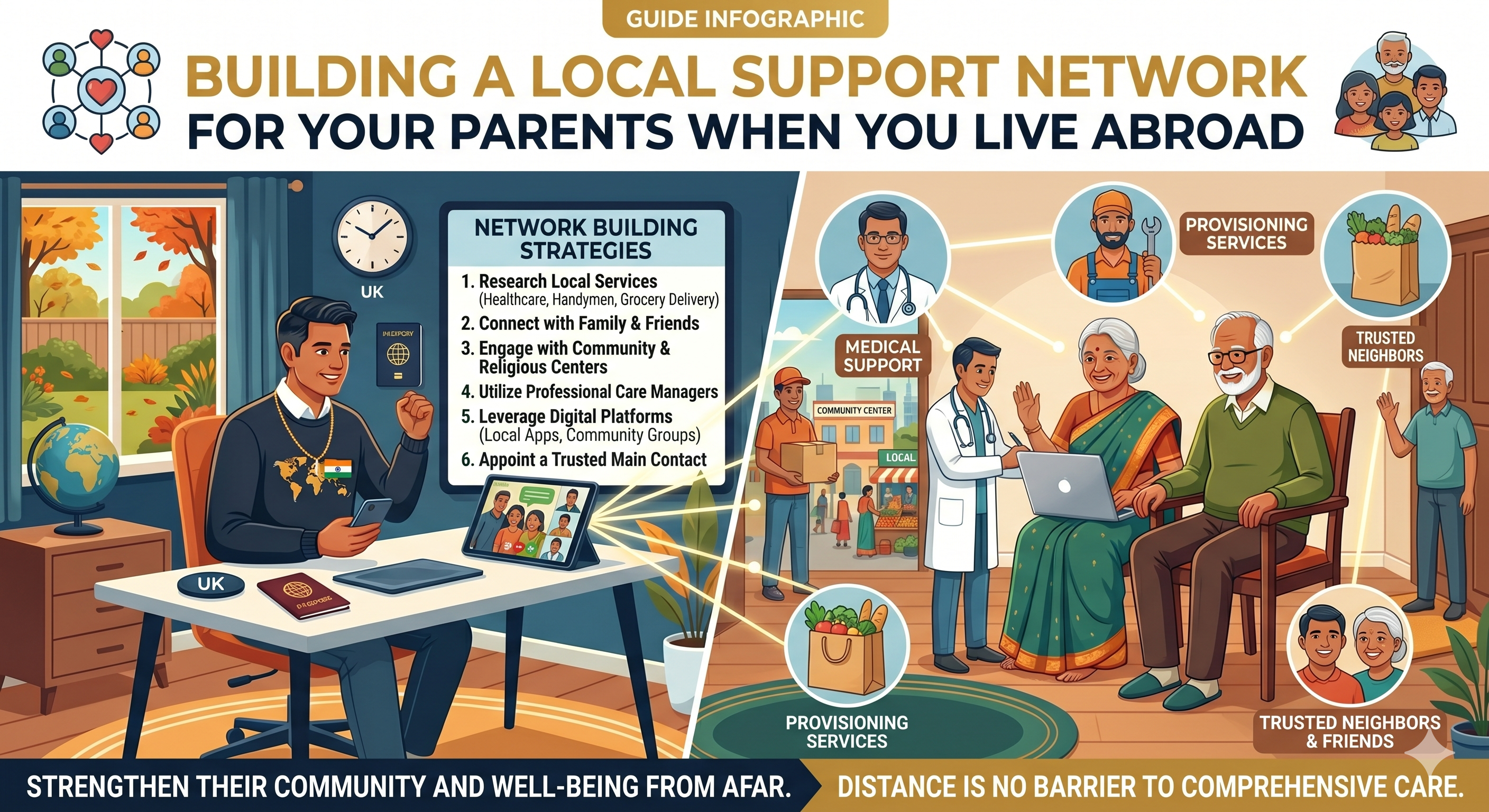
No single person or service can carry the full weight of elderly care. The most resilient models distribute responsibility across family, professionals, and community — with clear roles, not assumptions.
Reading time: 5 minutes · Local Support Network
Why Local Networks Matter More Than Ever
When adult children relocate abroad, ageing parents often feel the absence acutely. A robust local support system does not replace that relationship — it ensures that the practical dimensions of care do not fall through the gaps that distance creates.
For Indian families, where multigenerational living has traditionally been the norm, this shift requires intentional planning. The support that once happened organically now needs to be deliberately designed.
Start With Trusted Family and Close Relatives
Siblings, cousins, aunts, or uncles can share responsibility for regular visits, medical appointments, and responding to urgent situations. Make expectations explicit — agree clearly on who handles what. Documented roles prevent the common situation where everyone assumes someone else is managing something important.
Engage Professional Home Care Services
Professional caregivers provide the structured consistency that even the most willing family members struggle to sustain alongside their own responsibilities. For families with limited local family support, a part-time professional caregiver may be the single most important investment in the network.
Leverage Community and Social Groups
Senior citizen associations, temples, community centres, and hobby clubs provide meaningful social engagement that family visits alone cannot replicate. Social isolation is a significant risk factor for cognitive and physical decline. Many cities offer walking groups, yoga classes, and interest-based gatherings specifically for seniors.
Digital Tools for Distance Management
Set up automated payments for regular bills. Establish a shared family messaging group for network members to post updates. A simple shared document listing all network members, their roles, and contact details prevents coordination gaps when one member is unavailable.
FOR EXAMPLE — Vikram, Singapore (age 47)
- Vikram’s parents live in Mumbai. He mapped his support network on a one-page document: his younger sister handles weekly errands and Sunday dinner; a trusted neighbour makes a daily morning call; a part-time caregiver manages medication, meals, and light household tasks; the family doctor conducts a quarterly review.
- Vikram calls twice weekly and manages finances through automated payments.
- No single person is overburdened. His parents feel genuinely well-supported rather than dependent on one overextended individual.
Key Takeaways
- Distribute caregiving across family, professionals, and community — not concentrated in one person.
- Make roles and responsibilities explicit in writing — goodwill without clarity creates gaps.
- Review and adjust the network annually as your parents’ needs evolve.
ALSO IN THIS SERIES
Explore senior care services at aeoncare.in to find support options tailored to your family’s specific needs.
Visit aeoncare.in